Jeet Kune Do
The Meaning of The Jeet Kune Do Symbol
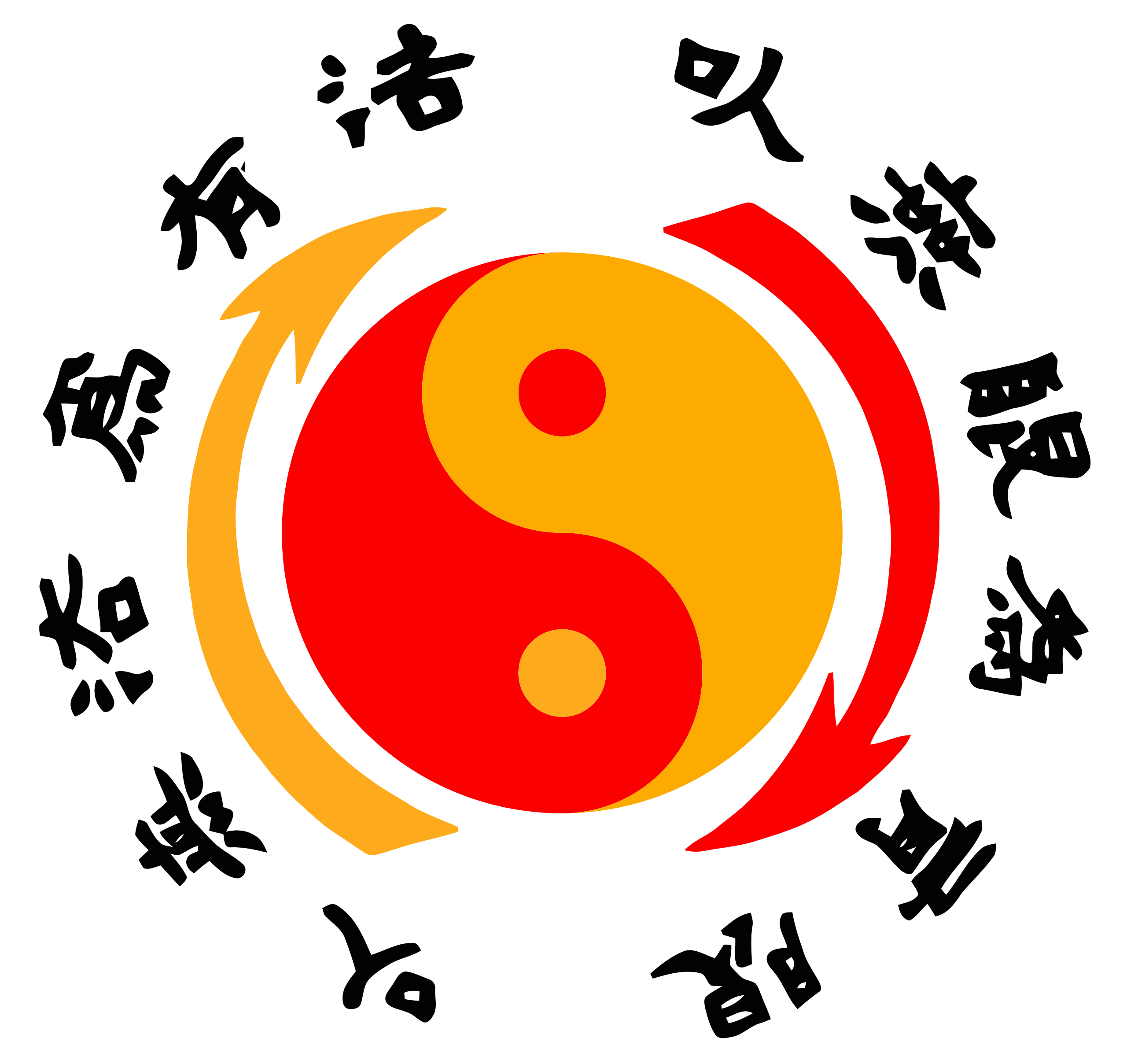
- Yin-Yang (Taijitu):
This ancient Chinese symbol represents the balance of complementary forces in the universe. In JKD, it signifies the harmony between opposing forces like hardness and softness, attack and defense. - Arrows:
The arrows encircling the Yin-Yang symbolize the constant cycle of change, growth, and evolution in martial arts and life. - Chinese Characters:
The phrase “using no way as way, having no limitation as limitation” encapsulates the core principle of JKD: freedom from fixed styles and doctrines, encouraging practitioners to adapt to any situation.
Principles
Bruce Lee incorporated into Jeet Kune Do four universal combat truths that he felt were self-evident and would lead to combat success if followed. The “4 Combat Ranges” in particular are what he felt were instrumental in becoming a “total” martial artist. This is also the principle most related to mixed martial arts.[28] These concepts help create a framework for adaptive, real-time decision-making in self-defence scenarios.
JKD practitioners also subscribe to the notion that the best defence is a strong offense, hence the principle of “Intercepting”. Lee believed that in order for an opponent to attack someone they had to move towards them. This provided an opportunity to “intercept” that attack or movement. The principle of interception covers more than just intercepting physical attacks. Lee believed that many non-verbal telegraphs (subtle movements that an opponent is unaware of) could be perceived or “intercepted” and thus be used to one’s advantage. The “5 Ways of Attack” are attacking categories that help Jeet Kune Do practitioners organize their fighting repertoire and comprise the offensive portion of JKD. The concepts of stop hits & stop kicks and simultaneous parrying & punching were borrowed from European fencing and Wing Chun’s theory of simultaneous defending and attacking. They comprise the defensive portion of JKD. These concepts were modified for unarmed combat and implemented into the JKD framework by Lee. These concepts also complement the principle of interception.
Be Like Water
Bruce Lee believed that martial systems should be as flexible as possible. He often used water as an analogy for describing why flexibility is a desired trait in martial arts. Water is infinitely flexible. It can be seen through, and yet at other times it can obscure things from sight. It can split and go around things, re-joining on the other side, or it can crash through things. It can erode the hardest rocks by gently lapping away at them or it can flow past the tiniest pebble. Lee believed that a martial system should have these attributes. JKD students reject traditional systems of training, fighting styles and the Confucian pedagogy used in traditional Kung Fu schools because of this lack of flexibility. JKD is claimed to be a dynamic concept that is forever changing, thus being extremely flexible. “Absorb what is useful; disregard that which is useless” is an often quoted Bruce Lee maxim. A JKD student is encouraged to study every form of combat possible, both to add to his arsenal and to know how to defend against such tactics.
Economy of Motion
JKD students are told to waste no time or movement. This technique can be called the technique of “least action” – strike the opponent with the least distance, time and energy possible but also giving a powerful and precise strike. When it comes to combat JKD practitioners believe the simplest things work best.[30] “Efficiency, directness, and simplicity are the hallmark of Jeet Kune Do,” according to Bruce Lee.
Stop Hits and Stop Kicks
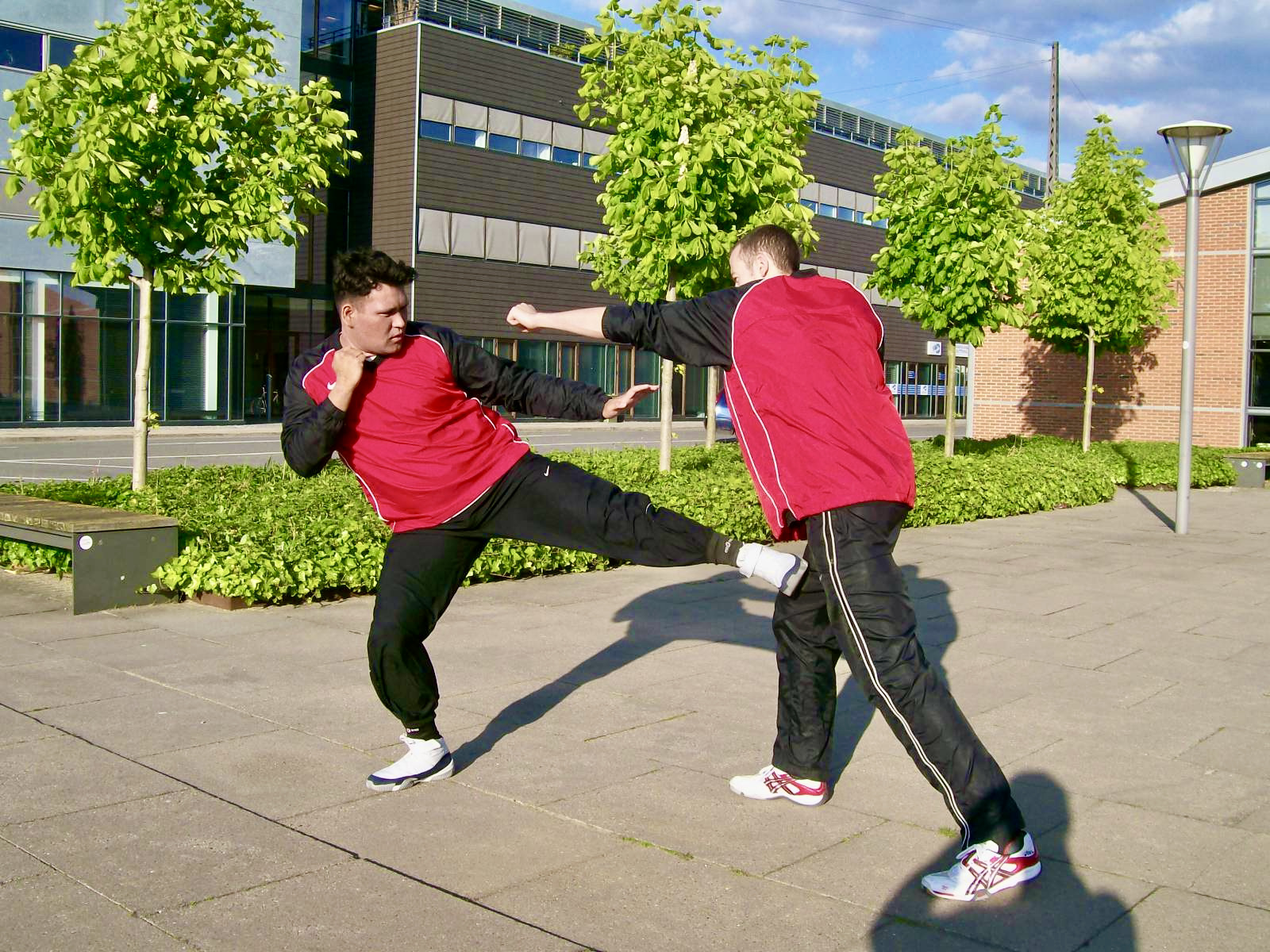
Adherents of JKD are taught to intercept an opponent’s attack with an attack of their own, rather than simply blocking the attack. JKD practitioners consider this to be the most difficult defensive skill to develop. This strategy is a feature of some traditional Chinese martial arts, as well as an essential component of European épée fencing (known in fencing terminology as the “counter-attack”
Simultaneous Parrying & Punching
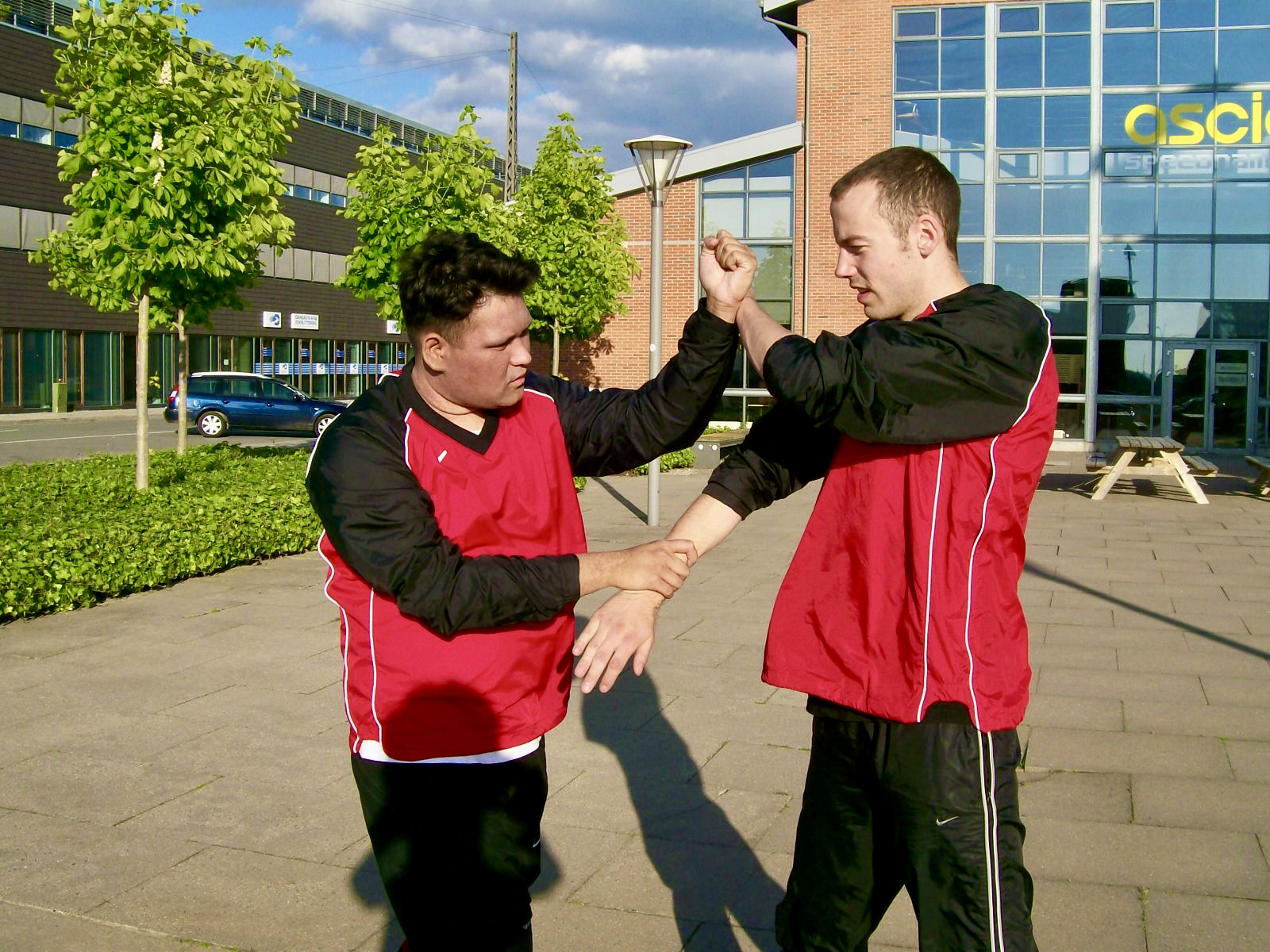
When confronting an incoming attack, the attack is parried or deflected and a counterattack is delivered at the same time. This is not as advanced as a stop hit but is more effective than blocking and then counterattacking in sequence. This is also practiced by some Chinese martial arts.
5 Ways of Attack –
- Single Angular Attack (SAA) and its converse Single Direct Attack (SDA).
- Hand Immobilization Attack (HIA) and its counterpart Foot Immobilization attack, which make use of trapping to limit the opponent’s function with an appendage.
- Progressive Indirect Attack (PIA). Attacking one part of the opponent’s body followed by attacking another part as a means of creating an opening.
- Attack By Combinations (ABC). This is using multiple rapid attacks, with volume of attack as a means of overcoming the opponent.
- Attack By Drawing (ABD). This is creating an opening with positioning as a means of counterattacking.
3 Parts of JKD
JKD practitioners believe that techniques should contain the following properties:
- Efficiency – An attack that reaches its mark
- Directness – Doing what comes naturally in a learned way.
- Simplicity – Thinking in an uncomplicated manner; without ornamentation.
The Meaning of The PIOMA Symbol
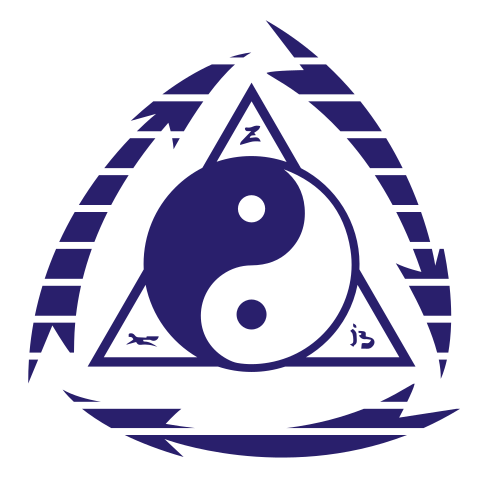
- The triangle represents the art & philosophy of the Filipino Martial Arts
- The circle represents Unity & Balance
- The 3 points of the triangle: Self-preservation, Self-perfection & Self-improvement
- The ancient “K” stands for Kali
- The ancient “E” stands for Eskrima
- The Ancient “S” stands for Silat
- Yin-Yang, represents the art & philosophy of JeetKuneDo
- The 3 arrows encircling the Yin-Yang symbolize the constant cycle of CHANGE, GROWTH & EVOLUTION in life
- The lines in the arrows symbolize Progression
- The missing lines in the arrows symbolize Creativity
- The empty spaces in the symbol symbolizes The Formless Form